Thank you for subscribing to Seavoices’ updates!

Please take a moment to check your email inbox and confirm your subscription to start receiving the latest news and updates.

29 Oct 2026
7 mins
Capt. Ashish Malik: The Real Nightmares We Rarely Talk About

Some of the most significant threats to maritime safety are often not sudden failures or headline-making incidents. Fatigue, mental strain and pressure on wellbeing are the quieter risks, building beneath the surface of everyday operations.- Capt Ashish Malik

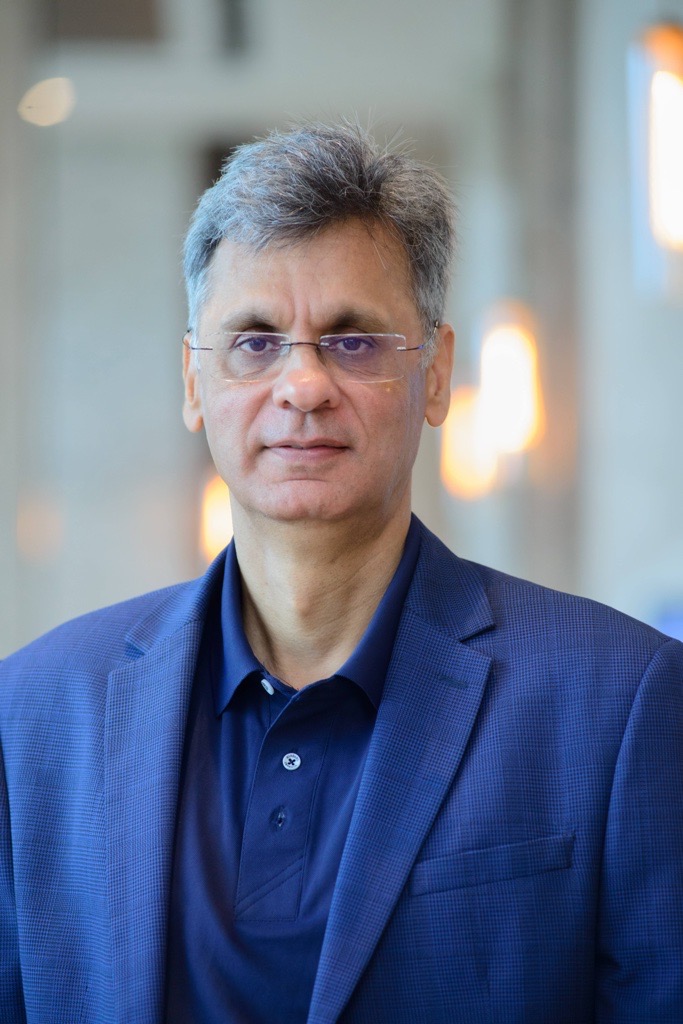
After 16 years at sea and more than 20 years in shore-based leadership roles, Capt. Ashish Malik, Managing Director of Anglo-Eastern Ship Management (Singapore) Pte Ltd, has seen how these risks develop.

“I have rarely seen a serious incident occur without warning signs,” he says. “If we want to safeguard the industry’s future, we must be willing to examine the risks that can become normalized over time.”

Ships are supported by increasingly sophisticated technology, evolving regulations and substantial investment in safety and compliance, but people will continue to determine how safely and effectively our industry operates, he tells SeaVoices.

Fatigue, A Systematic Safety Risk

Some of the most significant threats to maritime safety are often not sudden failures or headline-making incidents. Fatigue, mental strain and pressure on wellbeing are the quieter risks, building beneath the surface of everyday operations.- Capt Ashish Malik

After 16 years at sea and more than 20 years in shore-based leadership roles, Capt. Ashish Malik, Managing Director of Anglo-Eastern Ship Management (Singapore) Pte Ltd, has seen how these risks develop.

“For individuals, these pressures can create uncertainty and place further strain on wellbeing, with implications for performance, confidence and retention.”

When driven by workload, manpower constraints and operational expectations, fatigue becomes a system problem. The numbers are sobering. Around 2.57 million seafarers serve on more than 85,000 merchant ships. The industry faces an estimated shortfall of 39,100 officers in 2026, with 113,735 additional officers needed by 2030.

The implications extend beyond crewing. Workforce shortages can increase recruitment pressure, reduce crewing flexibility and add to existing workloads, placing training, succession and safety under further strain.

“Fatigue is not just a personal burden. It is the point at which a workforce shortage becomes a safety risk.”

Workforce planning should therefore be considered an integral part of safety planning, Capt Malik stresses, with wellbeing embedded in how the fleet is run.

When Operational Cost of Silence

Fatigue is inextricably linked to emotional and psychological strain, a second and less visible burden.

He offers the example of a chief officer preparing for a major inspection while also worrying about an unwell family member. An engineer on a prolonged contract extension maycontinue to meet operational expectations while quietly struggling with exhaustion and uncertainty.

These pressures are not always visible to colleagues. Whether they remain hidden depends largely on the seafarer’s environment.

Hierarchy can make junior seafarers hesitant to raise concerns. Some seafarers, including those who are underrepresented onboard, may worry that their concerns will be misunderstood or judged differently. When escalation is met with blame, excessive questioning or reputational consequences, people become reluctant to speak up.

“Our profession has long valued resilience and perseverance, and rightly so,” Capt Malik points out. “But valuing resilience should not prevent us from recognising when people need support..”

The consequences of silence are serious. When fatigue and stress go unreported, an organisation risks losing visibility of the pressures affecting day-to-day operations. . Over time, it may also lose experienced personnel whose technical expertise, shipboard leadership, situational awareness, mentoring ability and safety-critical judgement cannot be replaced quickly.

“In a safety-critical industry such as maritime, creating the conditions for honest conversations is an important part of managing risk,,” he cautions.

Trust Between Ship and Shore

Misunderstandings between ship and shore often stem from differing working realities. Shore teams juggle commercial deadlines, compliance requirements and multiple vessels, while crews manage operational demands alongside fatigue, rough seas and isolation.

“A routine follow-up from shore may feel like pressure onboard. A delayed response from a vessel may be interpreted ashore as disengagement, even though the crew is dealing with operational overload,” Capt. Malik highlights.

He stresses effective communication depends not only on the information exchanged, but also on how it is delivered and received. He recalls a near miss involving a broken mooring line. An instruction to inspect mooring ropes across the fleet was initially perceived as an additional task by crews already managing demanding workloads.

“When the incident and its safety implications were explained, the crew understood the purpose, and the response became far more proactive,” he says. “People respond better when they understand the ‘why’, not just the instruction.”

How leaders respond to problems matters too. Asking “Why was this not handled?” breeds defensiveness, whereas asking “Help us understand what challenges the vessel was facing at that time” fosters trust and learning.

Empathy, in his view, is not a soft addition to maritime leadership; it has practical operational value. “A superintendent may see only delayed reports, without fully understanding the realities on board, while a seafarer may feel that nobody ashore understands what the vessel is facing at that moment,” he notes. ” Effective maritime leadership requires empathy alongside technical competence.”

“Trust between ship and shore cannot be built only during a crisis; it must be built consistently through transparent communication, accessible leadership and genuine wellbeing engagement.”

Retention as a Safety KPI

Retaining seafarers takes more than competitive pay. Family connection, predictable leave, reliable connectivity, quality accommodation, fair treatment and career progression all matter.

At Anglo-Eastern, wellbeing “must be embedded in how the fleet is run”, Capt. Malik says. In 2025, the company held more than 5,000 structured engagements with seafarers and their families through its Buddy System, HR Speak and Family Connect. It also ran more than 65 wellbeing activities and provided onboard connectivity on 50 vessels. Reporting channels include Designated Person reporting, whistleblower mechanisms and WeCare, a dedicated welfare team. Through IListen, seafarers are given time and space to speak without interruption, with their feedback treated as an opportunity to learn and respond. “We treat each piece of feedback as an opportunity to improve and respond,” he explains.

Capt Malik points out that crews are often the first to notice fatigue, rising stress, interpersonal tensions, equipment concerns and procedural gaps. These signals can be overlooked when communication becomes overly task-focused or insufficient attention is given to the vessel’s circumstances.

“Vessel feedback can serve as an important early-warning mechanism, not only for safety but also for culture, morale and operational sustainability.”

Anglo-Eastern maintains seafarer retention above 95 per cent, while around 72 per cent of promotions are filled internally.

He is quick to point out, “These figures are not presented as a definitive answer. They reflect an ongoing effort to understand what our people need and to strengthen stability, trust and resilience across the organisation.”

Culture matters as much as systems. “Systems alone are not enough; culture determines whether people actually use them,” he adds. When seafarers see that concerns about fatigue or stress are handled fairly and are taken seriously, handled fairly and followed by appropriate action, trust grows.

Capt Malik argues that retention should be considered an indicator of organisational resilience, that workforce planning should be discussed alongside safety performance and operational risk, and that industry reporting should include meaningful measures of wellbeing alongside incident statistics.

He is also clear that no single company can fix this alone. Shipowners, managers, governments, regulators, maritime academies, unions and seafarers all have a role to play.

A Question for Every Maritime Leader

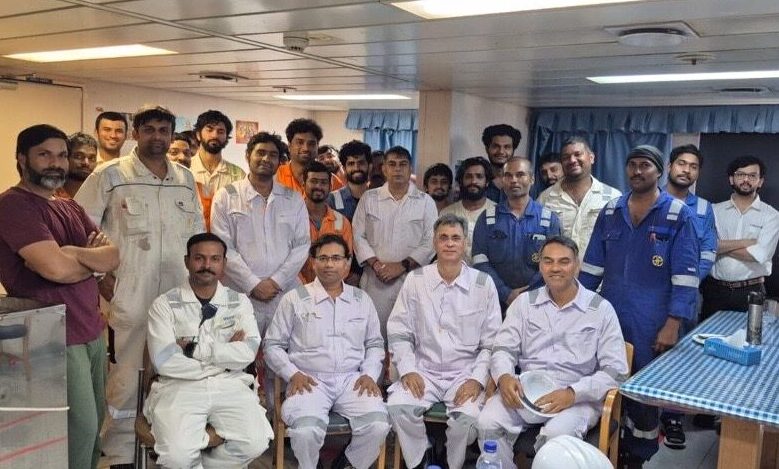
Capt. Ashish Malik with crew members during a vessel visit in Singapore

Capt Malik leaves leaders with a simple question: “Would you recommend a career at sea to your son or daughter?”

Technology will continue to improve, and regulations will continue to evolve. But the industry’s success, he argues, will depend on how effectively it protects, supports and empowers the people who keep global trade moving.

“When we place the human element at the centre of our decisions, safety, performance and sustainability naturally follow,” he says.

If the industry wants the next generation to choose this profession, it must create an environment where people can perform, develop and speak up without fear. As Capt. Malik puts it, the future of the profession ultimately depends on that.