Thank you for subscribing to Seavoices’ updates!

Please take a moment to check your email inbox and confirm your subscription to start receiving the latest news and updates.

20 May 2026
5 mins
Xiong Zihao – What the Sea Took, and What It Gave Back

Xiong Zihao still remembers the weight of the paper in his hands.

It was a quiet afternoon on board when a senior fitter approached him with a document to print. Zihao glanced at it and froze. “It was his wife’s death certificate,” he recalls. The fitter spoke calmly, explaining that he needed to request an early sign-off. For Zihao, the moment landed like a blow. “It felt like a punch in the face from reality.”

Until then, seafaring had mostly been about systems, schedules, and procedures. In that instant, the profession revealed something far heavier: what life at sea can take from a person.

Zihao, 29, did not come into maritime expecting moments like this. Trained in green building during his polytechnic years, his path initially pointed firmly towards land-based work. He entered the maritime world almost accidentally, after stopping by a booth at the NSF Career Fair.

“I hadn’t decided what I wanted to do,” he says. “The career progression seemed attractive, and I figured there was no harm in gaining another certification.”

What he expected was technical work, routine, and long stretches of isolation. What he encountered instead was unpredictability, emotional sacrifice, and an unexpected depth of human connection.

WhatsApp Image 2026-05-07 at 19.52.42 (1)

Early into his journey, Zihao enrolled in the Tripartite Engineering Training Award (TETA) course at Wavelink Maritime Institute. Unsure what seafaring truly entailed, he signed up for both deck and engine programmes. With an engineering background and a smaller intake on the engine side, he found himself “passively assigned” to engineering.


At home, his parents, despite him being an only child, did not hold him back. Their only request was simple: stay in touch and reach out when support was needed.

The initial phase of training was demanding. Safety took centre stage, with survival simulations involving first aid, firefighting, and emergency response. Alongside that came the fundamentals of shipboard machinery, the systems that keep a vessel alive. It was intense but purposeful, building a foundation for realities still to come.

Those realities surfaced quickly.

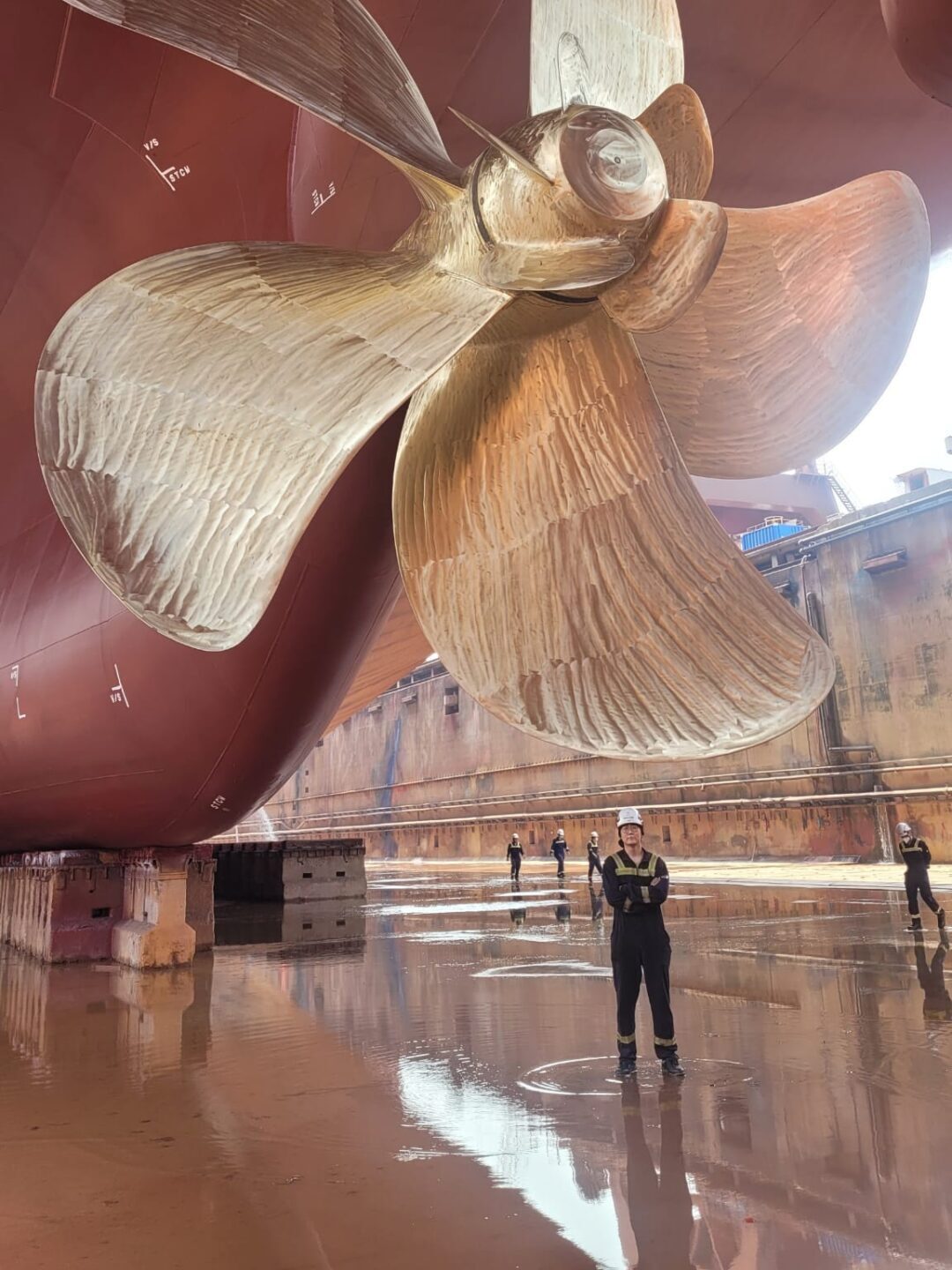
Barely a month into his first contract, Zihao found himself witnessing a job few junior engineers ever see: changing a liner at sea. The complexity and pressure shook him. “I thought the intensity and skill required were insane,” he recalls. “I wasn’t really confident anymore.”

As doubt crept in, a 2nd Engineer stepped in with a quiet but powerful reassurance. “Don’t worry,” he said. “I have sailed for 11 years, and this is my first time doing this, too.”

That moment stays with Zihao. It taught him that experience does not eliminate uncertainty. Instead, it teaches you how to face it. “That’s when I realised how important mentality is in this line of work,” he reflects. “The unexpected is more common than we’d like.”

Before signing on, Zihao had prepared himself for what he imagined would be six monotonous months of work and isolation, expectations shaped further by the fact that his early voyages took place during the height of the Covid-19 pandemic. Instead, he discovered something different.

Life on board a well-equipped vessel surprised him. “The vessel actually had a basketball court, an indoor swimming pool, a gym, karaoke, and even a sauna,” he says. Beyond the facilities, there was a sense of community. Between watches, Zihao found himself socialising, exercising, and bonding with crewmates over barbecues and movie nights, far from the “work-and-sleep” cycle he had envisioned.

Yet moments of connection only made the sacrifices more apparent.

WhatsApp Image 2026-05-07 at 19.52.41 (1)

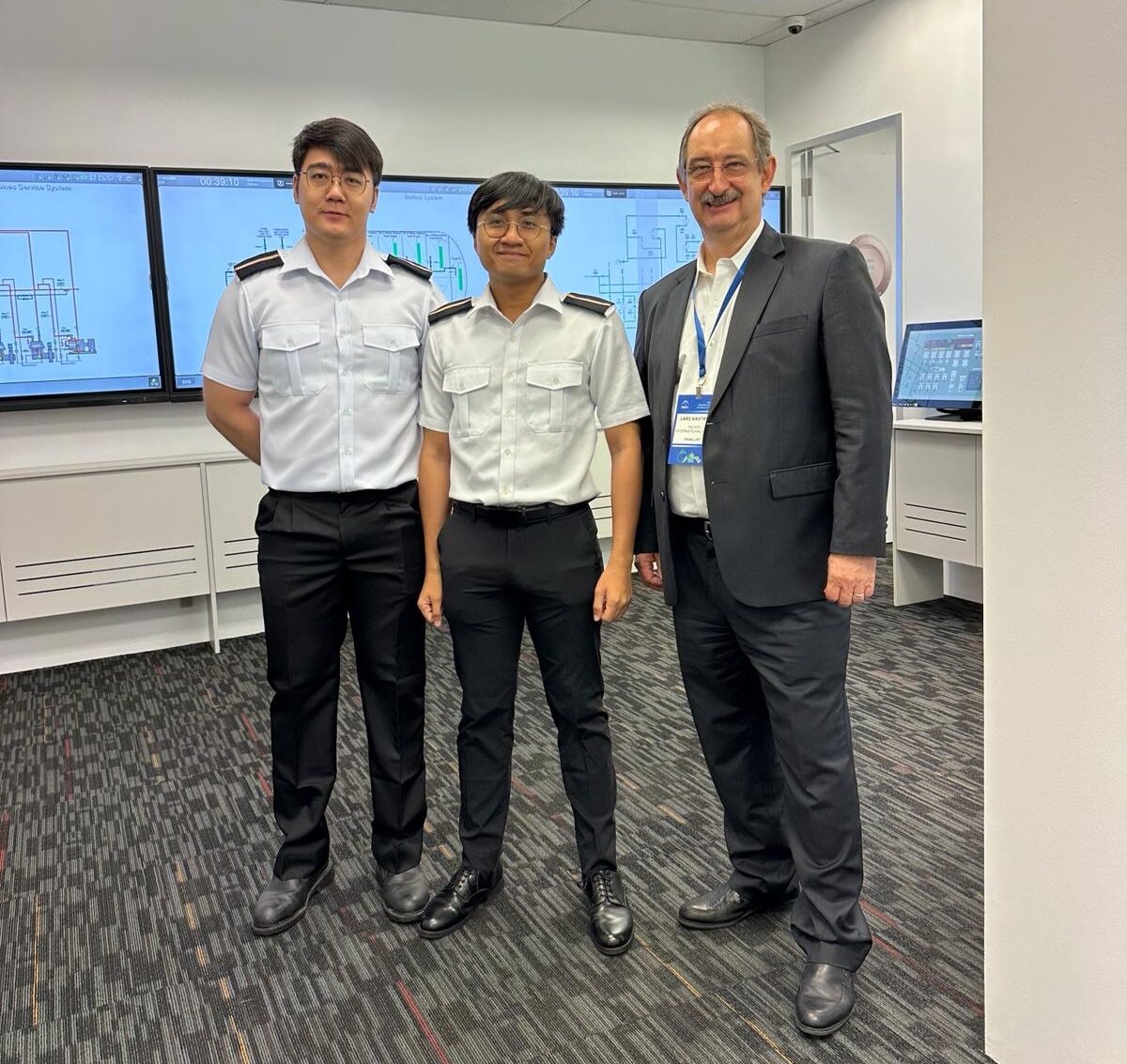
Xiong Zihao (Most left) 

“You realise how much you might miss,” he says. Returning home, Zihao often finds himself asking friends, “What did I miss?” He struggles to keep up with new slang, shared memories, and life events that unfolded without him. Still, distance has sharpened his appreciation for people and moments. “It makes you appreciate what you do have out here,” he reflects.

Over time, the sea changed him.

Professionally, Zihao became more responsible, learning to stay composed when things did not go according to plan. He learned that manuals do not always have answers, and that real solutions often come from thinking beyond them. Personally, he grew tougher, less inclined to complain, and more willing to learn through discomfort.

He watched his seniors closely, learning not just technical skills but how to navigate people and pressure. One principle stood out: doing something is better than doing nothing. Even when you are wrong, you have eliminated one possibility and learned something along the way.

Support along this journey mattered. During quarantine periods, SMOU sent meals and health packs that became something to look forward to during long days of waiting. As a graduate of Wavelink Maritime Institute, Zihao is clear that without the union’s support, he might never have become a seafarer.

Today, he is working towards his Class 1 certification, which he sees as the real entry point to long-term growth in the maritime sector. While he has a budding interest in shore-based roles such as surveying or P&I (Protection and Indemnity) insurance, he is not dwelling on that yet. For now, Class 1 comes first. This reflects the same pragmatism that guided him years ago at a career fair: take one clear step at a time.

Looking back, Zihao describes his journey from green building diploma holder to 4th Engineer as “diving into the seas of the unknown.” What he gained was not just technical skill, but perspective.

At sea, he learned that unpredictability is constant, sacrifice is real, and responsibility extends far beyond the engine room. In understanding what the sea could take from a person, he also learned what it gives back: resilience, clarity, and a quieter sense of strength that stays with you long after you return to shore.